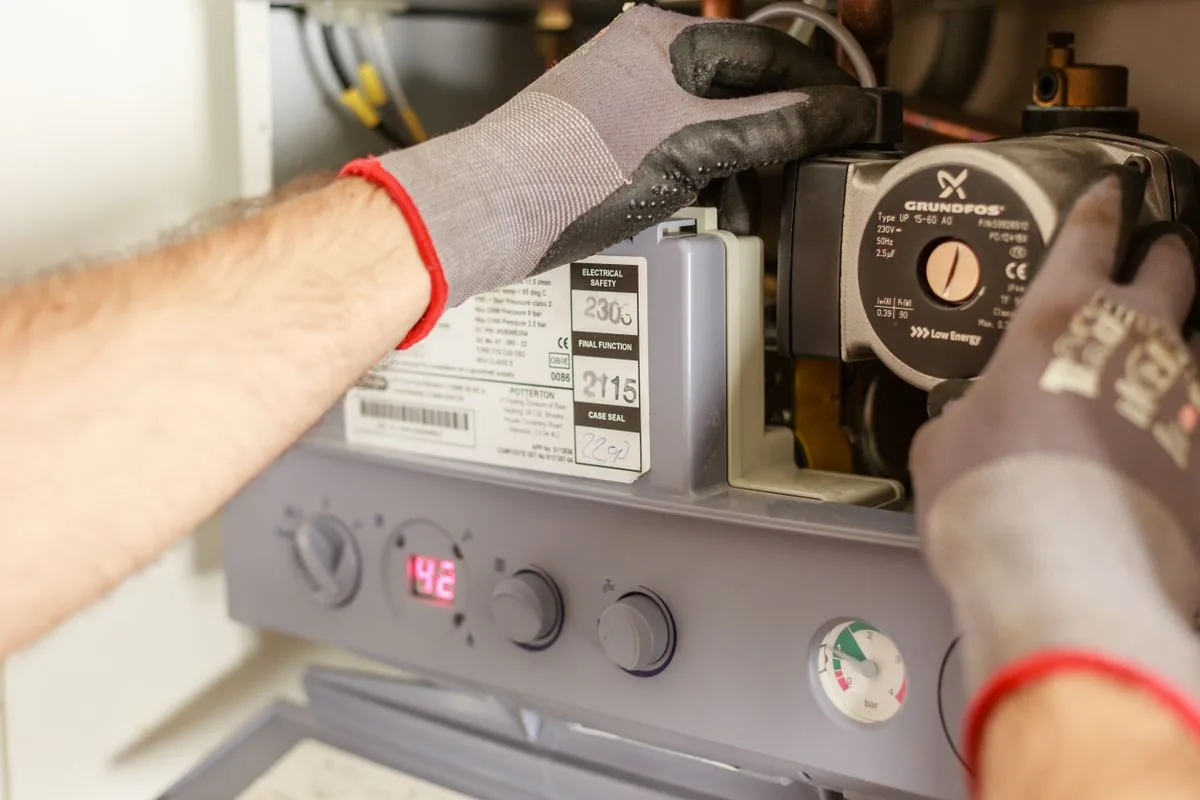
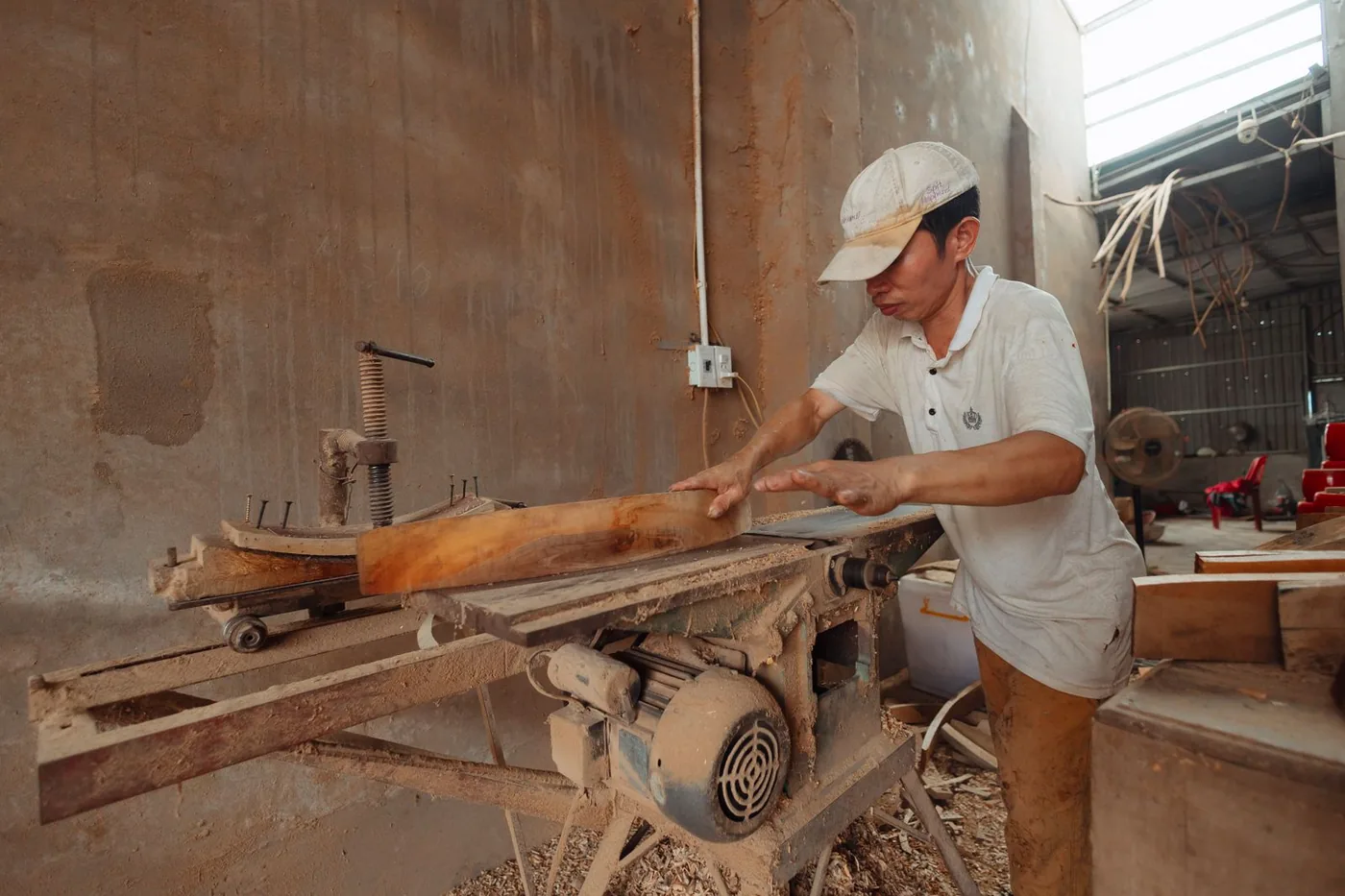
Perth carpentry is a trade where the best work disappears. Frames get lined, decks get furnished, cabinetry fills with someone else's possessions, and by handover the finished result is credited to the whole build rather than the crew that made it square. A website is the one place that work stays visible, year after year, at the exact moment a homeowner in Scarborough or Baldivis is deciding who to call.
JetBlok Studio builds fast, SEO-ready websites for Australian tradies, and carpenter website design Perth has its own set of rules. Homeowners want proof of workmanship, evidence you are properly licensed and insured, and a way to request a quote in under a minute. Get those three things right and the site earns its keep. Hub: carpenter website design. Related: websites for tradies, web design Perth, builder website design.
What carpenter website design in Perth has to do
A carpentry site is not a digital business card. It has three jobs, and every page should serve at least one of them.
- Prove workmanship with photos of jobs that match the work you actually want more of.
- Build trust fast by showing licences, insurance and credentials without making the visitor hunt for them.
- Capture the job with a quote form that is easy to complete on a phone while a homeowner stands in a half-finished kitchen.
Anything that does not support those three jobs is decoration. Stock photos of a stranger's hands holding a hammer do not prove anything, and a "Welcome to our website" home page wastes the only ten seconds you get.
Galleries of past work: your permanent evidence
Most of a carpenter's portfolio is hidden the moment the job is done. That is precisely why a gallery matters more for carpentry than for almost any other trade. The proof has to be captured deliberately, then stored where customers can find it.
Photograph the stages, not just the finished job
Framing crews, joiners and fix-out carpenters should shoot three sets of photos on every significant project: the structure before it is closed in, the detail work during installation, and the finished result. The structure shots are what convince a builder or homeowner that your set-out is accurate and your bracing is right. Finished shots sell the dream. Detail shots, such as a mitred joint, a flush door, a clean scribe or a neatly set hinge, sell the standard.
Phone cameras handle this well in good light. Shoot wide for context, then step in close for joinery and finish. Consistent, well-lit photos will always beat a handful of blurry ones taken at dusk.
Group projects the way customers search
Visitors arrive with a specific job in mind, so build separate galleries rather than one endless scroll. Useful groupings include:
- New home framing and structural carpentry
- Renovations and extensions
- Decks, pergolas and outdoor living
- Kitchens, cabinetry and built-in joinery
- Doors, windows, skirtings and fix-out
- Repairs, maintenance and insurance work
Each gallery should carry a short caption noting the suburb, the type of build and the scope. That text does double duty: it reassures the visitor and gives search engines something to index beyond an image file.
Displaying licences and credentials to build trust
Trust is the bottleneck in carpentry enquiries. Homeowners have heard enough stories about unfinished decks and disappearing deposits to approach any quote with caution. Credentials answer that fear before it turns into a closed browser tab.
What to put in front of visitors
- Your licensing details, including the licence type and number, displayed clearly rather than buried in a footer.
- Public liability insurance cover, shown as a plain statement rather than a copied certificate with personal details visible.
- Any trade memberships, registrations or certifications that apply to the work you take on.
- Years in business and the suburbs you regularly work in.
- Real reviews from real customers, with first names and suburbs where permission allows.
Licensing and registration requirements vary depending on the work and its value, so confirm exactly what applies to your trade and job type with the relevant Western Australian authority before you publish claims. Never state a licence number you do not hold, and never leave an expired credential on the site. A single inaccurate claim does more damage than an empty credentials section.
Put credentials near the decision, not just on an About page
An About page is where people go when they are already interested. The better placement is a short trust strip on the home page, on every service page, and directly beside the quote form. Three lines is enough: licensed, insured, and local. Link through to the full credentials page for anyone who wants detail.
Quote and request forms that capture jobs
Every carpentry website needs one primary action, and it should be a quote request rather than a phone number alone. Calls suit urgent repairs, but most homeowners researching a deck or a renovation want to send details without committing to a conversation.
Fields that work
- Name and best contact number.
- Suburb, so you can judge travel and quote realistically.
- Job type, presented as a dropdown of your service categories.
- A short description box with a character guide rather than a blank field.
- Photo upload, which is the single most useful feature on a carpentry form.
- Preferred contact time, which reduces phone tag with customers who work days.
Keep it under seven fields. Rough budget ranges can filter out mismatched enquiries, but they also scare off good customers who have no idea what a deck costs, so treat them as optional.
Make it fast on a phone
Most Perth homeowners will find you on a mobile. A form that loads slowly, resizes badly, or requires an account will lose the enquiry. Large image files are the usual culprit, which is why compression and modern image formats matter as much as the design itself. JetBlok builds on Next.js to keep pages light; hosting is included on the Next.js sites we host (fair use).
Local SEO so Perth homeowners actually find you
A beautiful site nobody finds is a hobby. Local search is where carpentry work is won, because almost every job starts with a suburb name.
- Set up and maintain a Google Business Profile with accurate hours, service areas and ongoing photo uploads.
- Build suburb and service pages that match how people search, such as decking in Joondalup or framing in Rockingham, rather than one page trying to cover everything.
- Keep your business name, address and phone number identical everywhere they appear online.
- Publish project write-ups that name the suburb and the scope of work, since these earn both local relevance and reader interest.
JetBlok offers Local SEO Perth, SEO Perth and AI SEO covering Google plus AI assistants such as ChatGPT, Gemini and Perplexity, which increasingly field "find me a carpenter near me" style questions. No provider can guarantee rankings, and anyone who does should be treated with suspicion. What you can control is a technically clean site, genuine content and consistent local signals.
What carpenter website design costs in Perth
Pricing in this market ranges from DIY builders up to agency retainers, and the difference usually comes down to how much strategy, copywriting and ongoing optimisation is included. JetBlok publishes its packages up front so you can compare like for like. All figures AUD.
| Package | Price | What it suits |
|---|---|---|
| Starter | $999 one-time | Up to 5 pages, plus one showcase such as a project gallery, reviews or testimonials |
| Growth | $1,999 one-time | More pages and features, Google Business setup and 3 months of Local SEO |
| Pro | $2,999+ | Custom builds such as calculators, client portals, 3D and ecommerce, with 6 months of SEO |
| Care Plan | $299 per month, optional | Ongoing SEO, updates and support. Not required to own your site |
Hosting is included on the Next.js sites JetBlok hosts, under fair use. You own your domain, which typically costs around $20 per year. Corporate and bespoke work is quoted individually. Check the pricing page for current details, and see websites for tradies for how the packages apply to trade businesses. Related: web design cost Perth and fixed price website design Perth.
Mistakes that cost carpentry businesses enquiries
The same problems show up on carpentry sites across Perth, and they are all fixable.
- A gallery of twelve images at full resolution, leaving mobile visitors waiting while the page loads.
- No suburb or service named anywhere, so nobody searching locally finds the site.
- Licence and insurance information hidden on a page no one opens.
- A contact form that emails an address nobody checks, or that fails silently.
- Finished photos only, with no evidence of the structural work that separates a carpenter from a handyman.
- Copy written in vague terms such as quality workmanship, without naming the services, materials or areas served.
Working through that list usually lifts enquiries more than a redesign does. If you want the full picture of what JetBlok builds, browse the portfolio or look at small business web design in Perth for the local context. Similar trade guides: builder website design Perth and plumber website design Perth.
Frequently Asked Questions
How much does a carpenter website cost in Perth?
Prices vary widely, from DIY builders through to agency retainers. JetBlok packages start at $999 one-time for a lean site of up to five pages, $1,999 for a larger build with Google Business setup and three months of Local SEO, and $2,999 or more for custom work. An optional Care Plan is $299 per month. Hosting is included on sites JetBlok hosts, and you own your domain at roughly $20 per year.
Do I need a website if I get all my work from word of mouth?
Word of mouth still needs somewhere to land. When a past client recommends you, the next step is usually a search, and a site with real project photos, licence details and a quote form converts that referral far better than a phone number alone. It also captures homeowners who have never heard of you and are searching their own suburb.
What photos should go on a carpentry website?
Shoot structure before it is closed in, detail work during installation, and the finished job. Group them into galleries for framing, renovations, decks and pergolas, joinery, fix-out, and repairs. Add captions noting the suburb and scope. Consistent, well-lit phone photos taken on every significant job will outperform a small set of professionally shot images taken once.
How long before a new website brings in enquiries?
Quote requests can arrive within days of launch if you already have traffic from referrals or a Google Business Profile. Search visibility builds more slowly as pages get indexed and accumulate signals. Any provider promising a specific timeline or ranking position is overpromising, so judge a site on the quality of its enquiries rather than a guaranteed number.
Is carpenter website design different from a generic tradie site?
Shared foundations such as speed, mobile forms and Local SEO apply to every trade. Carpentry needs stronger gallery proof, stage photography and credential placement because the finished work is often hidden. See the carpenter website design hub and services for how JetBlok scopes trade builds.
If you want a carpenter website that shows the work that usually gets covered up, JetBlok Studio keeps the process simple: call or WhatsApp 0431 242 326, email rav@jetblok.com.au, or start a project brief. JetBlok Studio, ABN 39 822 500 563, builds from Gosnells for trades across Perth and Western Australia, and the first conversation costs nothing but a few minutes.
Photos via Pexels: HONG SON, Jan van der Wolf, cottonbro studio.