The Speaking section is where most test-takers either win or lose their PTE exam. In 2026, the AI has become smarter, the tasks have evolved, and template-dependent strategies are being penalized. Let's break down exactly how to master each of the 7 speaking task types.
Quick Summary (click to expand)
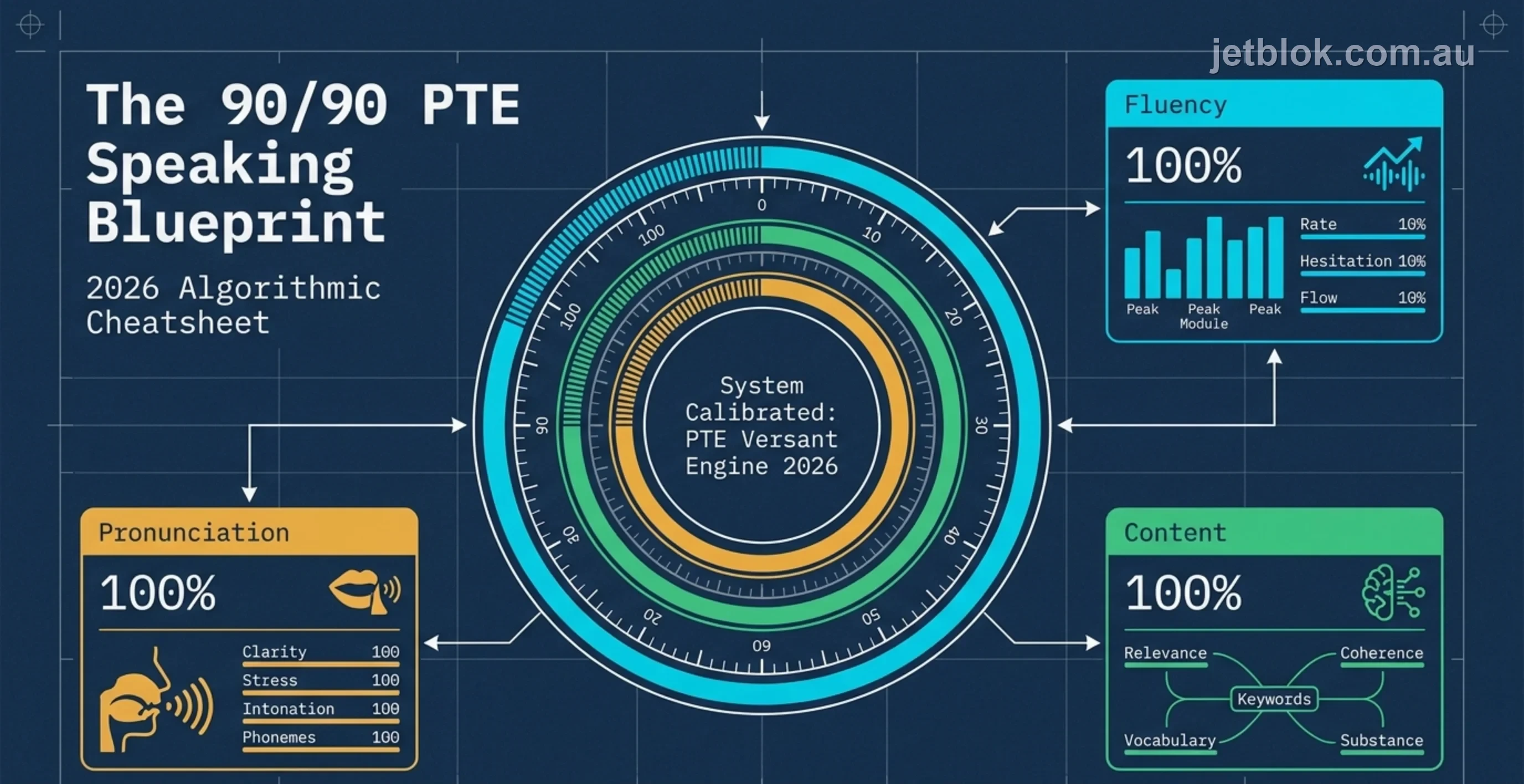
- AI measures fluency (30%), pronunciation (30%), and content (40%)
- Read Aloud: use meaning chunks, not word-by-word reading
- Repeat Sentence: chunk into 3-4 meaning groups, never pause
- Describe Image is worth 15% of your overall score — focus on trends, not data points
- Respond to a Situation (NEW): test social intelligence and pragmatic language
- Retell Lecture: paraphrase, don't parrot — human reviewers now check
- SGD (NEW): track and attribute views to each speaker
- Two-finger rule for microphone positioning prevents breath distortion
Understanding AI Scoring in Speaking
Before diving into tasks, understand what the AI measures:
- Oral Fluency (30%): Smooth, continuous delivery without hesitation
- Pronunciation (30%): Clear articulation, correct stress patterns, natural intonation
- Content (40%): Relevance and completeness of your response
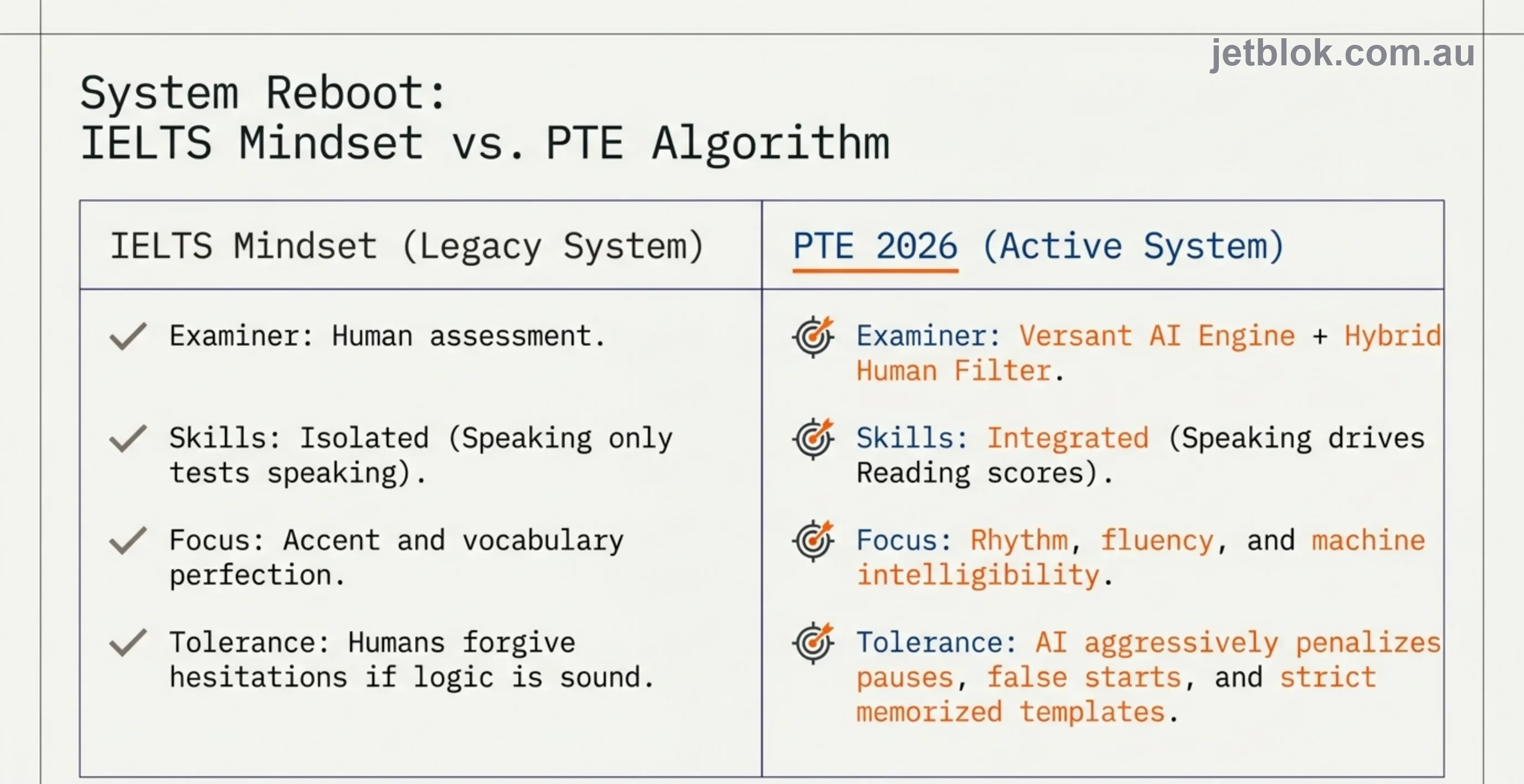
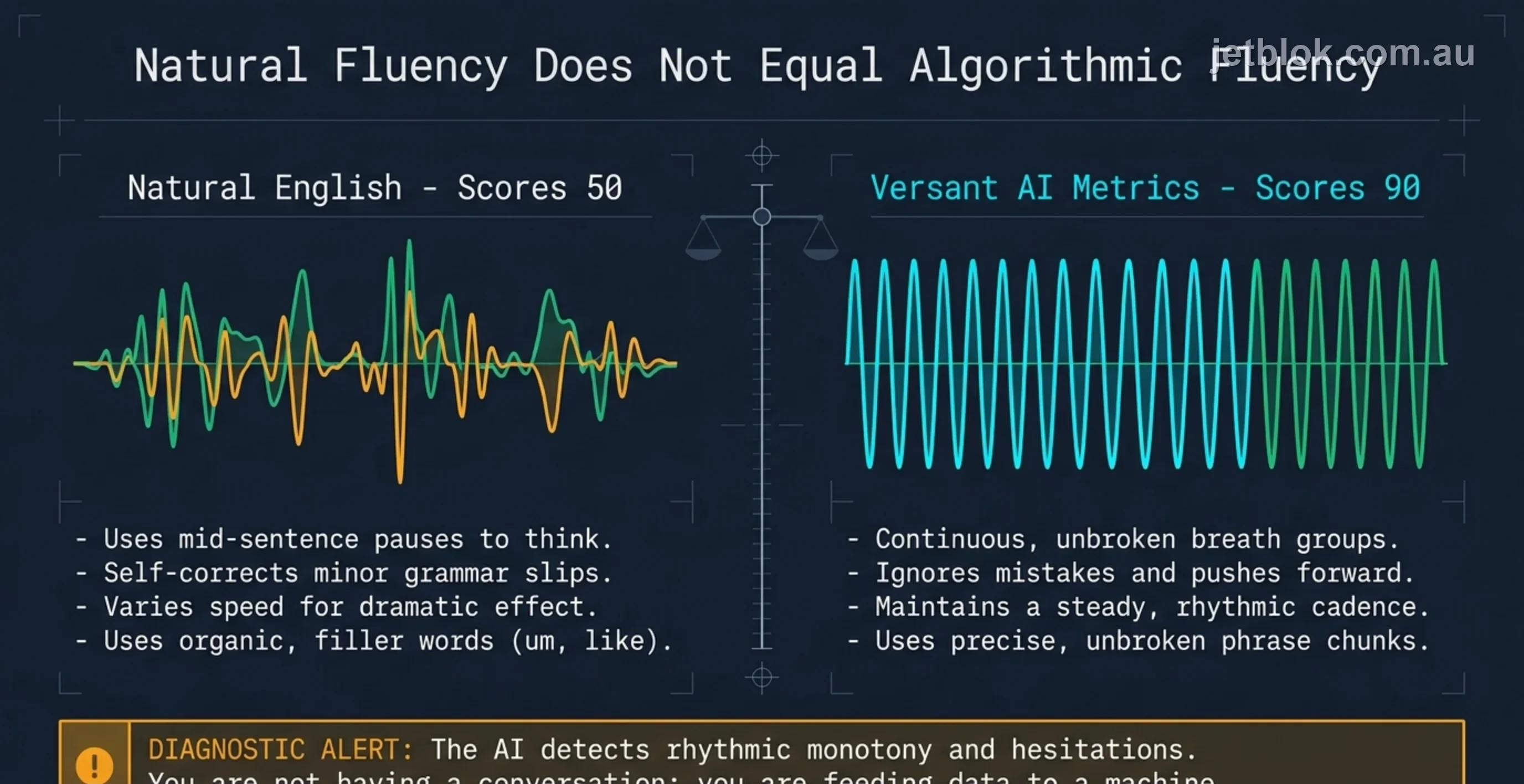
Critical Rule: The AI penalizes pauses more than mistakes. A smooth response with minor errors beats a choppy, "perfect" one.
Task 1: Read Aloud (RA)
What it is: Read a short text (60 words) aloud in 40 seconds.
Score contribution: Affects Reading AND Speaking scores.
Strategy: Meaning Chunks, Not Word-by-Word
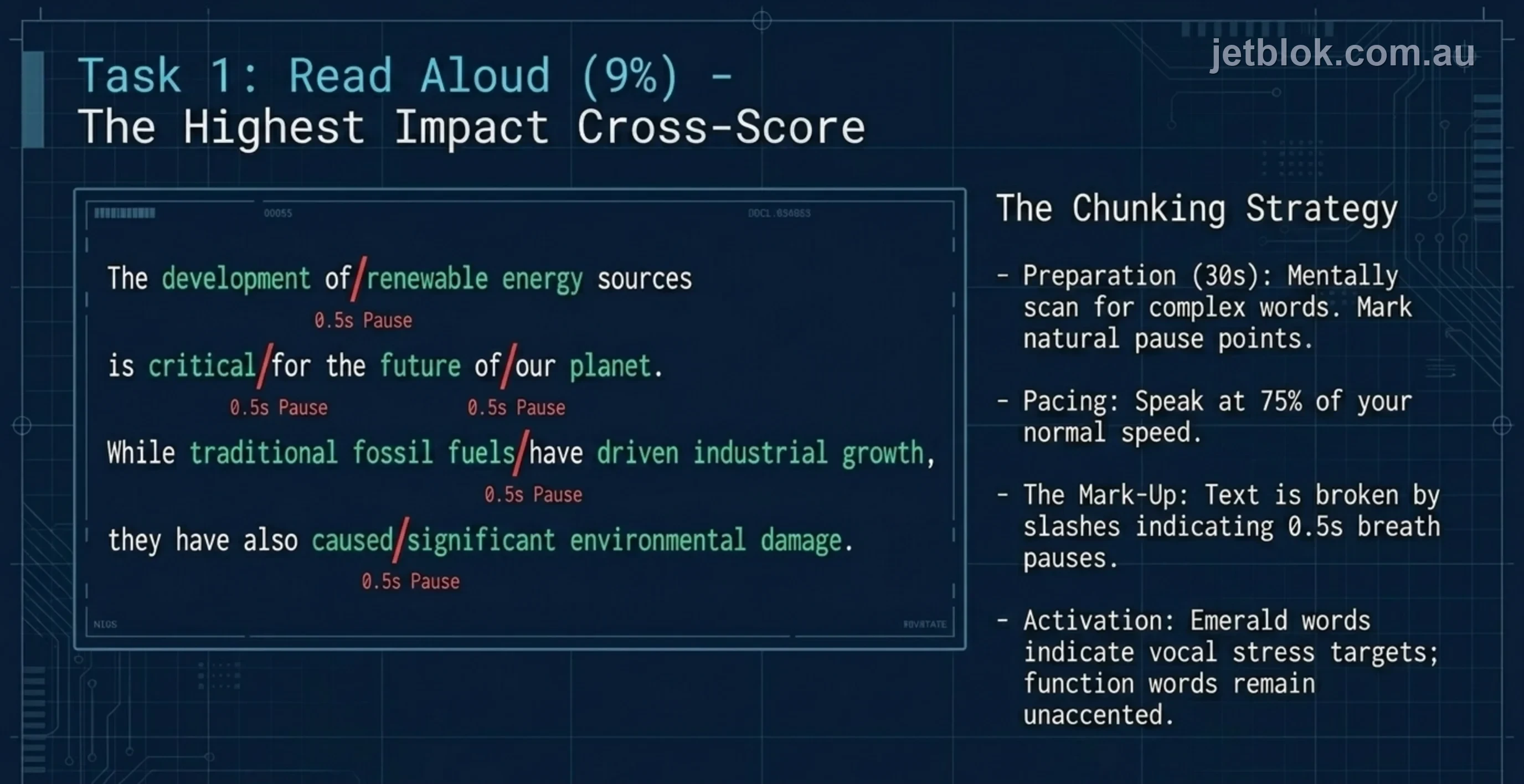
Don't read word by word. Group words into meaning chunks (3-5 words that belong together):
"The university library / has recently implemented / a new digital system / that allows students / to access resources remotely."
Pause slightly between chunks, not between individual words.
Key Tips:
- Use the preparation time to identify chunk boundaries
- Never self-correct - keep moving forward
- Maintain consistent pace throughout
- Let your voice fall at periods, rise at commas
Task 2: Repeat Sentence (RS)
What it is: Listen to a sentence and repeat it exactly.
Score contribution: Affects Listening AND Speaking - one of the highest-impact tasks!
Strategy: Chunking for Memory
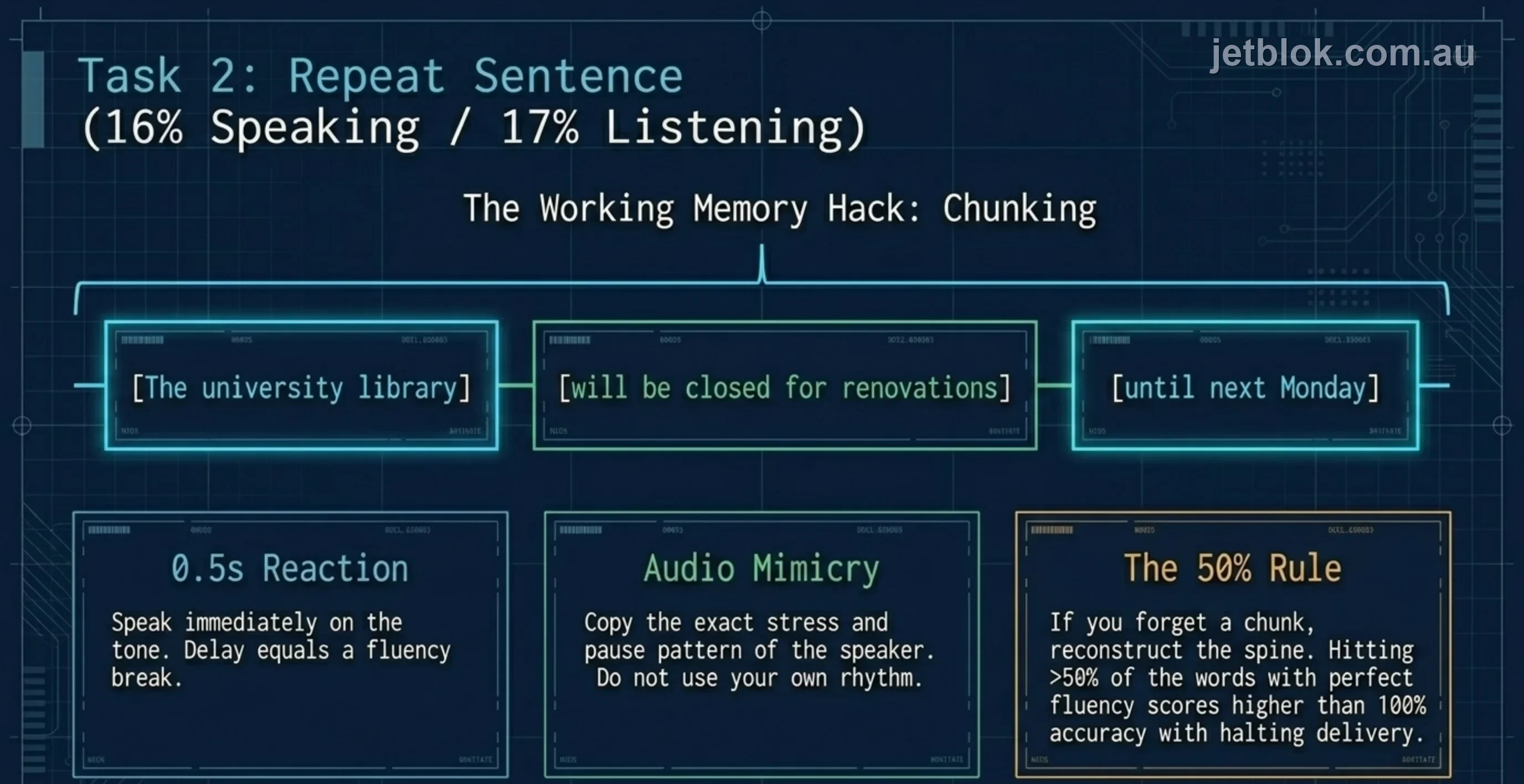
You cannot memorize 12-15 words individually. Instead, use chunking - remember 3-4 meaning groups:
Sentence: "The professor emphasized that students should complete their assignments before the deadline."
Chunks: [The professor emphasized] [that students should complete] [their assignments] [before the deadline]
Key Tips:
- Focus on the beginning and end of the sentence (these are easier to remember)
- If you miss a word, substitute a similar one - don't pause to think
- Copy the speaker's intonation pattern
- Practice with progressively longer sentences
Task 3: Describe Image (DI)
What it is: Describe a graph, chart, map, or diagram in 40 seconds.
Score contribution: 15% of your overall score - this is huge!
Strategy: Relationships Over Data Points
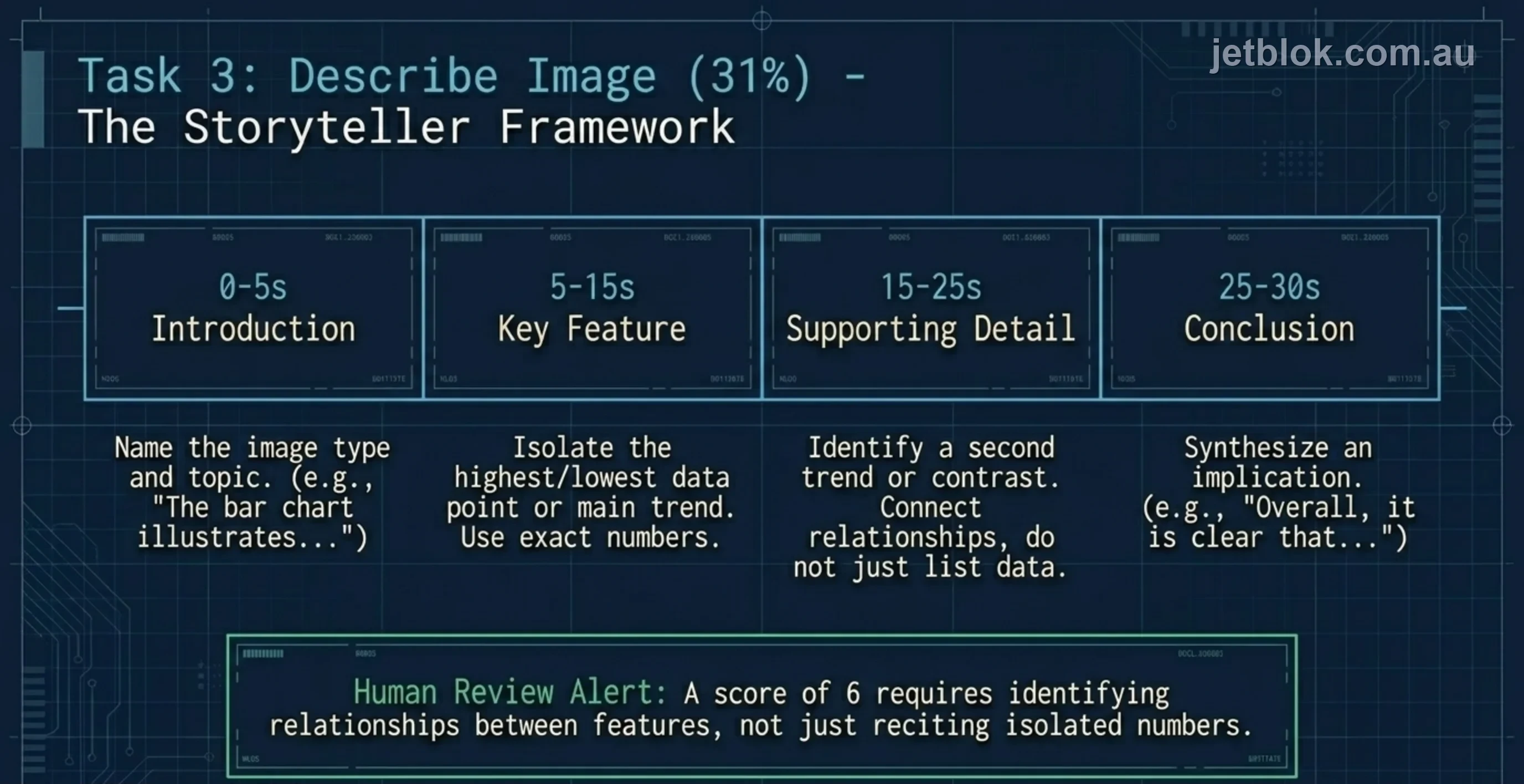
Don't list every number. Instead, identify and describe relationships and trends:
- What's the overall trend? (increasing, decreasing, fluctuating)
- What are the highest and lowest points?
- Are there any notable patterns or anomalies?
- What's the relationship between different elements?
Simple Framework (Not a Rigid Template):
"This [type of image] shows [main topic]. Looking at the data, we can see that [main trend]. The highest point is [X] while the lowest is [Y]. Interestingly, [one observation]. In conclusion, the image demonstrates [summary]."
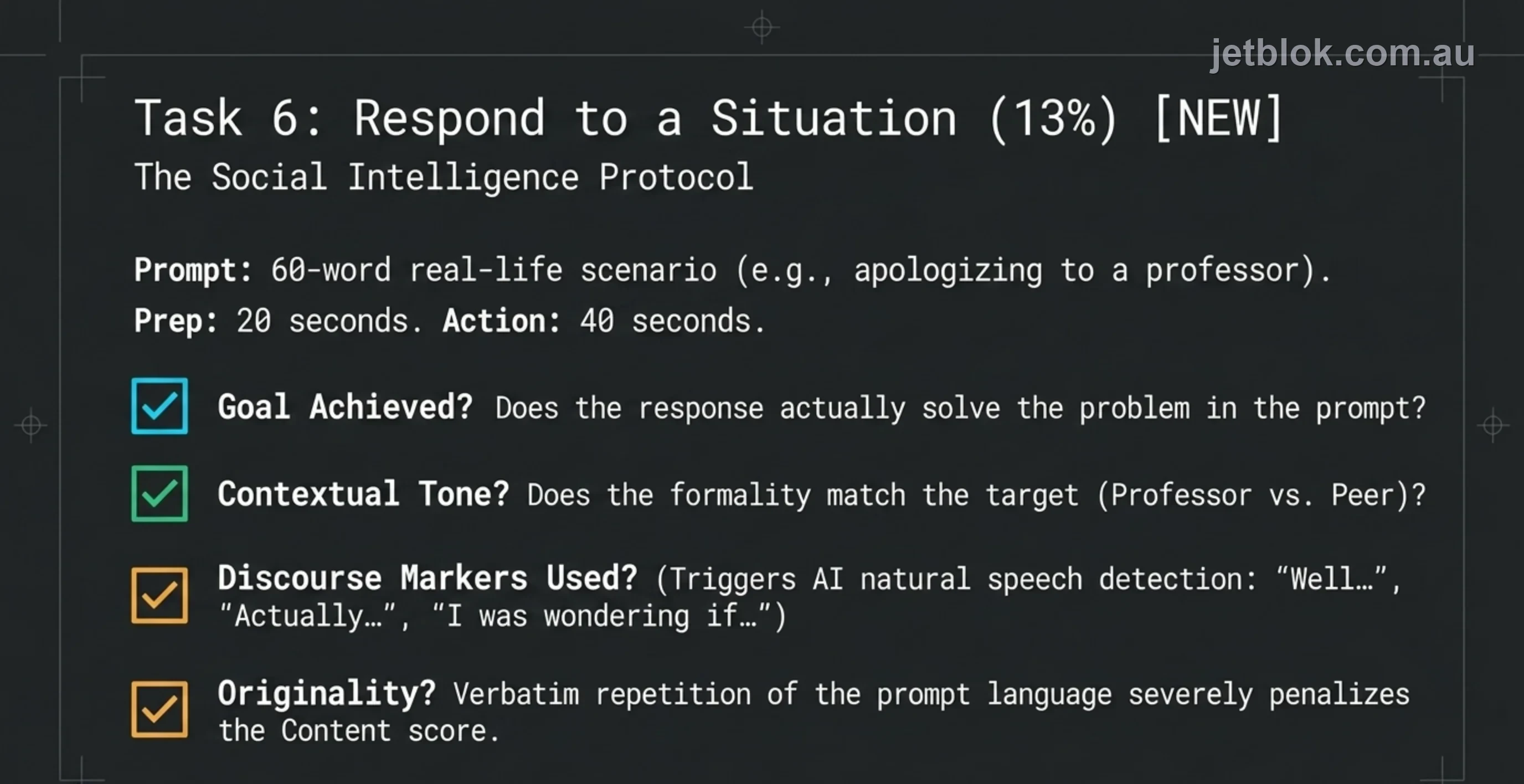
Task 4: Respond to a Situation (RTS) - NEW IN 2026
What it is: Hear a campus/workplace scenario and respond appropriately in 40 seconds.
What it tests: Social intelligence and pragmatic language use.
Example Scenario:
"Your classmate asks to copy your assignment because they've been sick. How do you respond?"
Strategy: Context-Appropriate Response
This isn't about right or wrong answers - it's about appropriate communication:
- Acknowledge the situation empathetically
- Provide a clear, reasonable response
- Offer alternatives if declining
- Maintain a polite, professional tone
Sample Response:
"I understand you've been unwell, and that must have been difficult. However, I'm not comfortable sharing my assignment directly as it could create problems for both of us with academic integrity policies. What I can do is share my notes with you, or we could study together so I can help explain the concepts. Would either of those options work for you?"
Task 5: Retell Lecture (RL)
What it is: Listen to a 60-90 second lecture and retell it in 40 seconds.
Critical change in 2026: Human reviewers now penalize responses that strictly repeat lecture language without reformulation.
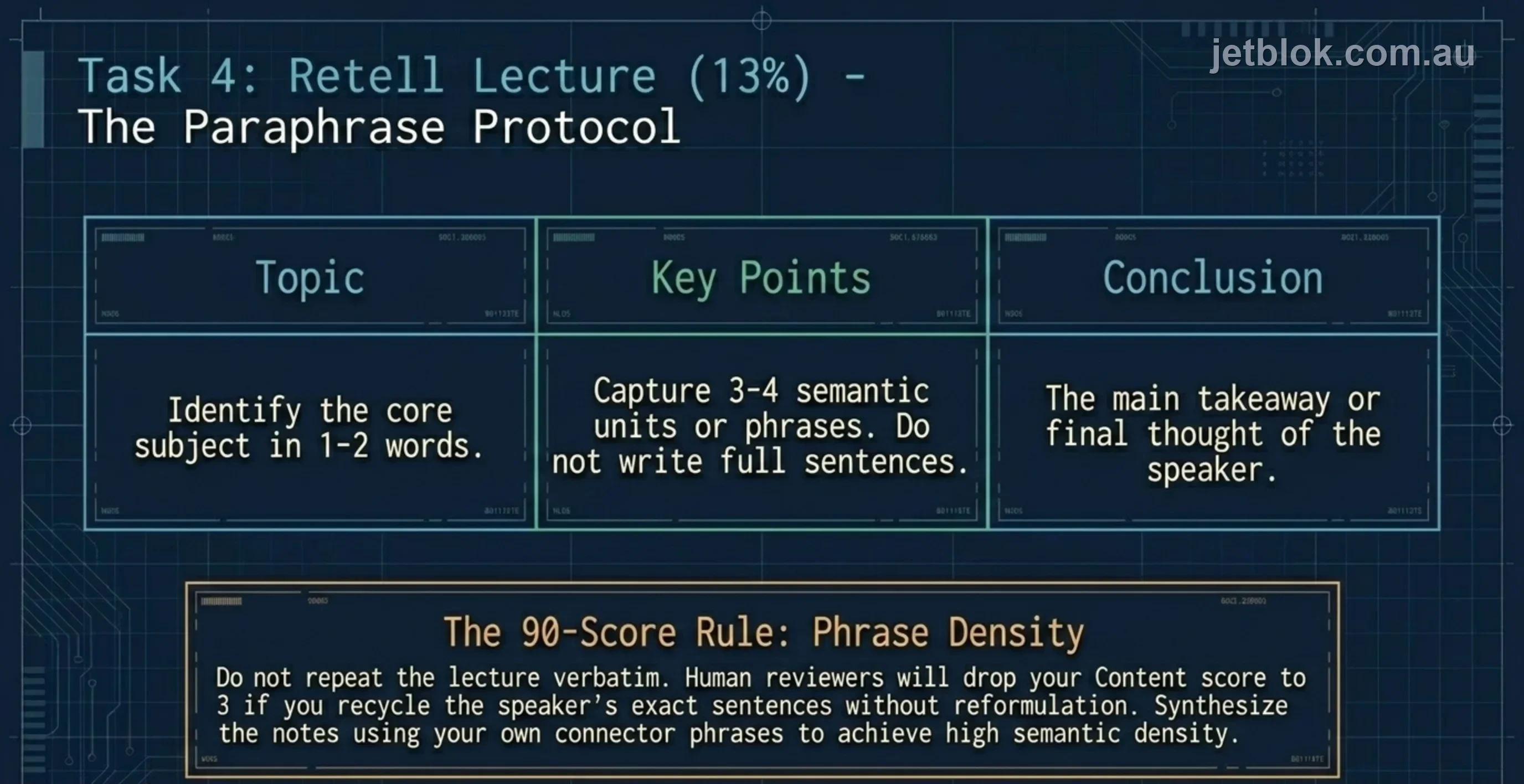
Strategy: Paraphrase, Don't Parrot
- Take brief notes during the lecture (keywords only)
- Identify the main topic, key points, and conclusion
- Use your own words - this is now essential
- Don't try to include everything - focus on main ideas
Task 6: Answer Short Question (ASQ)
What it is: Answer general knowledge questions in 1-2 words.
Score contribution: Only contributes to Listening score (not Speaking).
Strategy: Instant Retrieval
- Answer immediately - no need for full sentences
- Common topics: science, geography, everyday knowledge
- If unsure, say your best guess confidently
Task 7: Summarize Group Discussion (SGD) - NEW IN 2026
What it is: Listen to a 3-way conversation and summarize it in 40 seconds.
Key challenge: Attributing viewpoints to specific speakers.
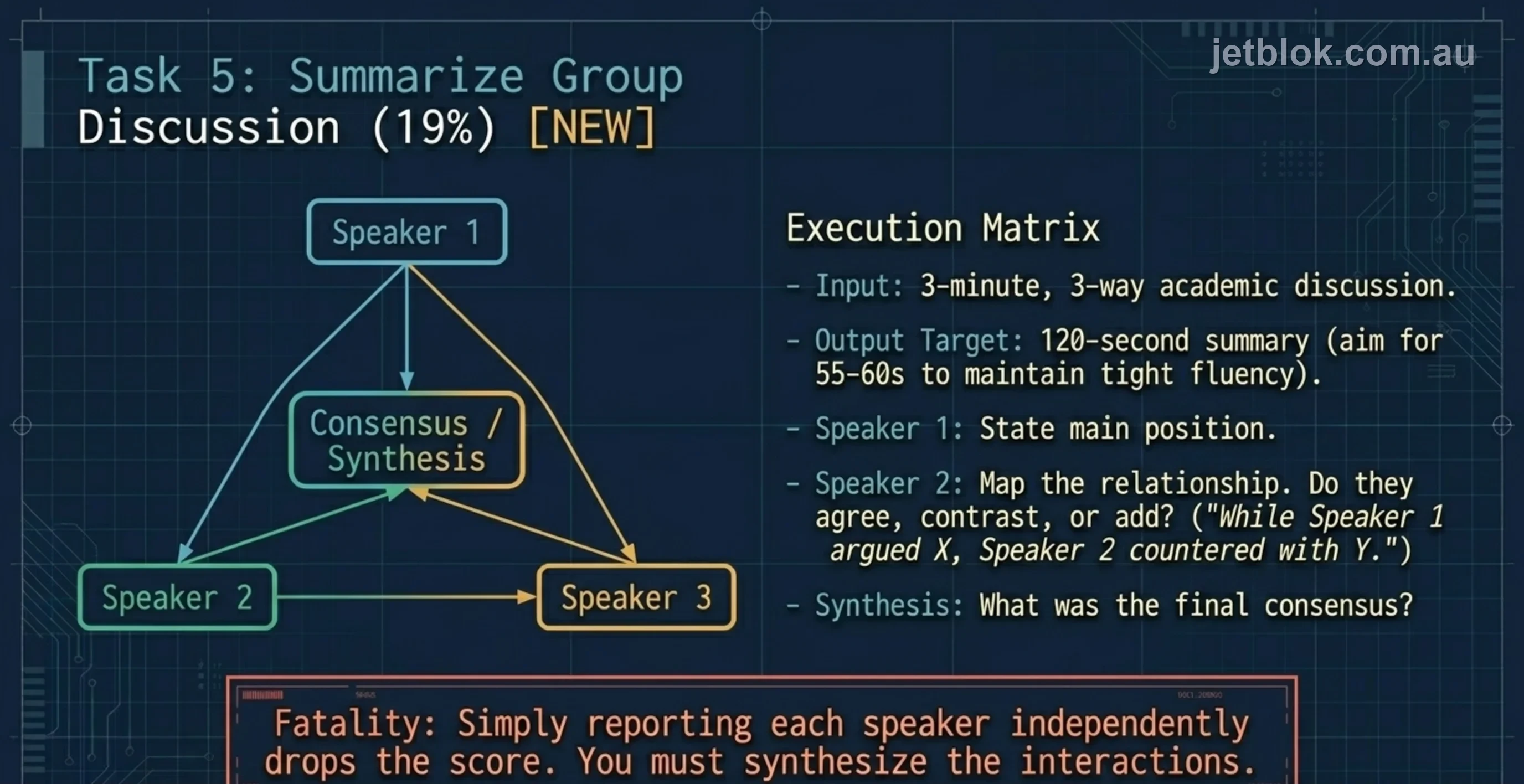
Strategy: Track Speakers
- Note each speaker's position (Speaker A thinks X, Speaker B thinks Y)
- Identify points of agreement and disagreement
- Your summary should reflect multiple perspectives, not just one
Microphone Setup: The Two-Finger Rule
Technical setup matters more than you think:
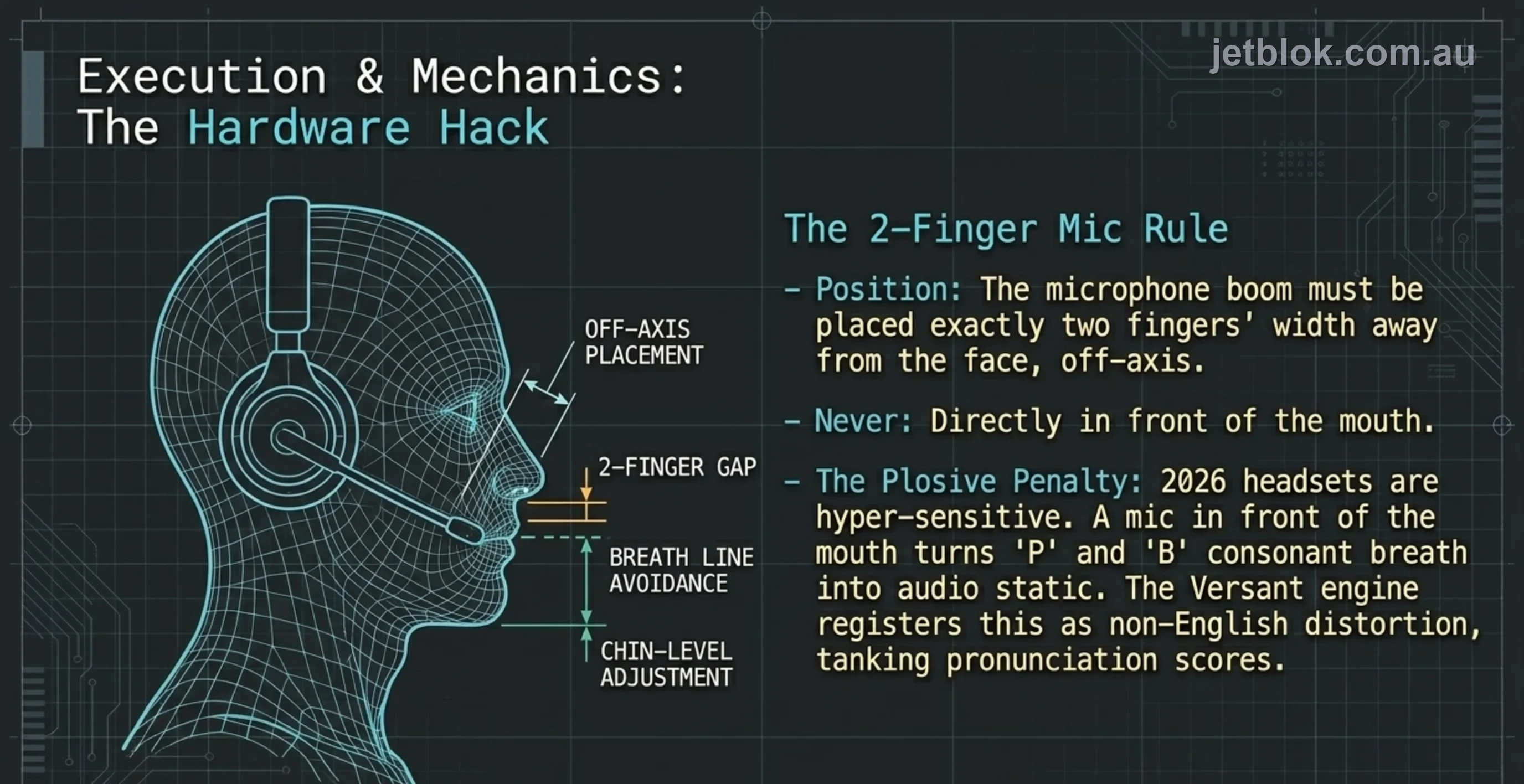
- Position microphone level with your nose
- Keep it two fingers' width from your face
- This prevents breath distortion from plosive sounds (P, B, T)
- Do a sound check before starting if offered
Practice Resources
Use platforms that mimic Pearson's AI engine:
- APEUni - Highly recommended for AI-calibrated practice
- PTE Tools - Good for Repeat Sentence practice
- E2Language - Structured courses with feedback
Next up: Check our PTE Writing Section Guide for SWT and Essay strategies!